

The Power of Analyzing Mock Tests
- saman tahvildaran
- Feb 3
- 2 min read

Updated: Feb 5
Mock tests are more than just practice—they are a powerful tool to understand your performance, identify patterns, and strategically improve your PTE skills. By analyzing mock test results in detail, you can pinpoint your strengths, uncover weaknesses, and refine your approach to every section of the exam. For example, one of my students improved their writing score from 66 to 84 after targeted mock test analysis and focused practice. This process not only boosts confidence but also develops effective strategies for time management, accuracy, and overall performance. With expert guidance and thorough analysis, every mock test becomes a stepping stone toward achieving your target score and unlocking new academic and career opportunities.

An almost 20-point jump after just two in-depth sessions focused on the Write Essay and Summarize Written Text sections.

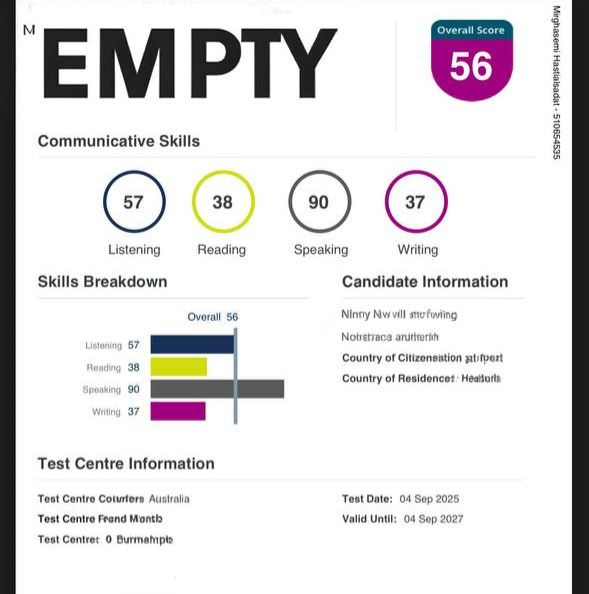
A remarkable score transformation: Reading improved from 38 to 63, and Writing jumped from 37 to 73 after structured, result-driven PTE training, supported by focused sessions and feedback-driven classes.
c

Practical Techniques for the Reading part:
Effective reading in the PTE exam comes from using smart strategies rather than reading every word. Test‑takers should begin by checking the question so they know what information to look for, then use skimming to understand the main idea and scanning to locate keywords quickly. Noticing logical connections—such as pronouns, transition words, and time markers—helps especially with re‑ordering tasks. A strong awareness of collocations improves accuracy in fill‑in‑the‑blank questions, while eliminating grammatically incorrect or illogical options saves time. Because the reading section is fast‑paced, managing time and practising under pressure are essential for building confidence and improving overall performance.
Practical Techniques for the writing part:
Success in the PTE Writing section depends on using clear structure, strong grammar, and effective time management. Test‑takers should begin by planning their ideas briefly so their writing stays focused and logical. Using a simple, consistent structure—such as an introduction, two main points, and a conclusion—helps maintain coherence. Accurate grammar, correct punctuation, and varied sentence patterns improve overall quality, while paying attention to word limits ensures the response meets exam requirements. Students should also practise summarising information in one concise sentence, as this task rewards clarity and precision. Regular timed practice builds confidence and helps writers produce organised, well‑developed responses under pressure.


Comments